



Losing a loved one is one of life’s most challenging experiences. Going through grief and bereavement can be overwhelming, confusing, and isolating.
However, understanding the grief process and seeking support can make a significant difference in how you get through this difficult time.
In this article, we’ll explore what bereavement support is, why it’s important, and how it can help those who are grieving.
What is bereavement support and why is it important?
Bereavement support is designed to help individuals cope with the loss of a loved one. It differs from general counselling because it focuses on the specific challenges and emotions associated with grief.
“We are dealing with the grief,” explains Rifka Hanfling, Hope & Cope’s bereavement program coordinator. “We are dealing with emotions and things that are common in grief, such as the stages of grief, the emotions of grief, and the coping skills to be able to deal with our self-care. We help people answer such questions as, ‘How do I make sense of this?’ and ‘How can I make my life meaningful now that I’ve suffered this loss?'”
Bereavement support aims to:
- Normalize the grief experience. You’re not the only one with these feelings.
- Provide tools for coping.
- Offer a safe, non-judgmental space to express your emotions.
- Help people understand and navigate the stages of grief.
Why you should seek bereavement support
Grief is a complex and highly individual experience.
While there are common stages of grief, they are not linear. Each person experiences them differently. Bereavement support helps you understand and navigate these stages by helping you see how your experiences are normal and valid.
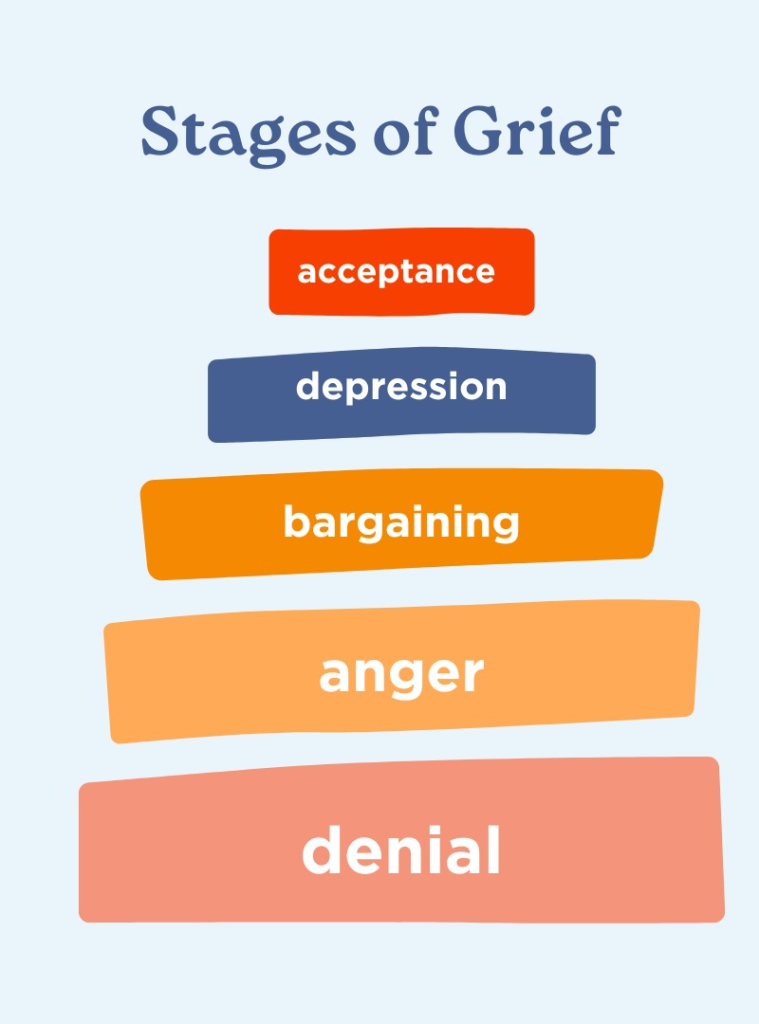
When talking about the stages of grief, people often refer to the Kübler-Ross model which describes it as follows:
- Denial: This is the initial stage where individuals may refuse to accept the reality of the loss. They may think, “This can’t be happening.”
- Anger: As the denial fades, the pain of the loss re-emerges, often leading to anger. This anger can be directed at various targets, including the person who has died, oneself, others, or even the situation.
- Bargaining: During this stage, individuals may try to negotiate or make deals with a higher power or within their own minds in an attempt to reverse or lessen the loss. Common thoughts might include “If only I had done this differently…”
- Depression: When it becomes clear that bargaining will not change the situation, individuals may enter a period of sadness, reflection, and mourning. This stage often involves deep emotional pain and a sense of despair.
- Acceptance: In the final stage, individuals come to terms with the reality of the loss. Acceptance does not mean they are “okay” with what happened, but they are able to begin to live with it and move forward with their lives.
Without proper support, some people may struggle to move forward in their grief journey. This can lead to what experts call “complicated grief,” where the intense emotions and disruption to daily life persist for an extended period.
Grieving can take a lot of time but many don’t realize it.
“If you lose somebody today,” says Rifka, “tomorrow, you’re not going to go back to normal. It’s impossible. And yet people think, ‘OK, this is in the past, so I should be able to carry on.’ When that doesn’t happen, they wonder again, ‘What’s going on with me? I’m such a strong person, and now I can’t do anything.'”
Seeking bereavement support early can help prevent the development of complicated grief and provide you with the tools you need to cope effectively.
When to seek help
If left unchecked, the guilt, anger, and regret associated with grief can be overwhelming and lead to anxiety or even depression.
When people reach that stage, they really must reach out for help. Unfortunately, they might not even recognize they need to take that step.
Certain signs indicate a need for professional bereavement support. These may include:
- Having persistent feelings of guilt, anger, or regret that interfere with daily functioning
- Having difficulty in carrying out daily activities
- An inability to find joy or meaning in life
- Isolating or withdrawing from social interactions
- Having thoughts of self-harm or suicide
Rifka advises, “If after a year you’re still feeling that way, then it’s a complicated grief, and at that point, it’s imperative to go and get help.”
Free bereavement support groups and peer support from Hope & Cope
Hope & Cope offer free bereavement support services to those in need. These services include:
- Individual support
- Counseling, which consists of three one-on-one sessions with Rifka.
- Peer mentors who are people who have gone through the same loss and can provide telephone support to someone who needs it.
- Bereavement support groups
- Living With Loss: A structured, time-limited support group for people who have recently lost a loved one.
- Mourning Cafe: An informal, drop-in support group that meets every two weeks, online.
- Mourning Walk: A support group where participants gather for walks in nature.
Before participating in any of the support options, you will meet Rifka or a member of her team to determine which option would be best.
In certain situations, we may recommend that you get the help of a professional therapist, as your needs may go beyond the psychosocial support Hope & Cope can offer.
The role of time when grieving the loss of a loved one
Grief takes time. There is no set timeline for “getting over” a loss.
Some people go through the process quickly. They acknowledge their emotions and feelings and they’re okay to go on with their lives.
Others require more time and more support.
As Rifka emphasizes, “We really address the grief. We explain it and make them aware that what they are going through is normal. Just because it takes time doesn’t mean there is anything wrong with them.”
We support you on your grief journey
Grief and bereavement are profound, life-changing experiences that require compassion, understanding, and support.
Whether through individual counseling, support groups, or other resources, you can find the guidance and comfort you need along the way.
There is no shame in asking for help.
“People shouldn’t be scared to reach out,” concludes RIfka. “Picking up that phone is the first step to get help. Call us so we can see what kind of help you can get. The support groups we have here are the best place for you.”
If you or someone you know is struggling with grief, reach out to us. You don’t have to face it alone.


